David McSweeney
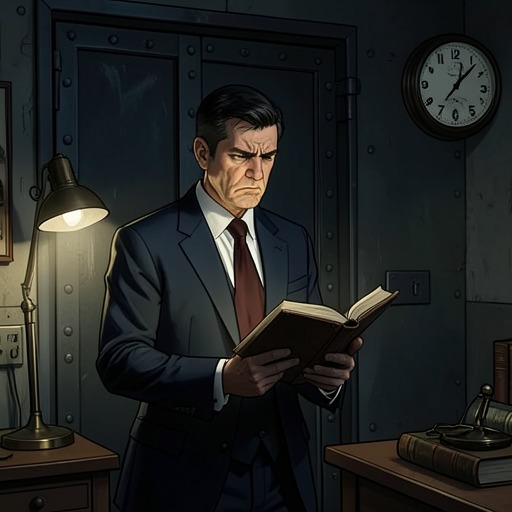
The Brass VerdictDavid McSweeney is the impostor seated as juror number seven in Walter Elliot’s murder trial and the sleeper at the center of a jury-tampering scheme. His false juror identity turns a routine court process into a route for covert influence: he enters the jury box under another person’s name, remains there through weeks of proceedings, and is ultimately exposed as part of a wider effort involving judicial and court personnel.
Identity and the False Juror Record
McSweeney’s identity first emerges through Cisco’s investigation of the juror whose name had been removed from the J-sheet provided to the defense. The form recorded a Palos Verdes residence, but Cisco followed the juror from the courthouse to an apartment off Beverly Boulevard. He then had the license plate of the pickup driven home checked; its registration connected it to McSweeney at that Beverly address. A driver’s-license photograph supplied by Cisco’s contact matched the man Cisco had followed.
The mismatch was more than an inaccurate address. Haller recognized that the man Cisco had identified might have appropriated a legitimate juror’s name and even that person’s summons, then presented a false driver’s license at juror check-in. In the ordinary process described by Haller, court clerks compared a driver’s license with the list of summoned jurors. A false identity could therefore pass through a basic checkpoint and gain entry to a place most people tried to avoid. The deception inverted civic duty: rather than evade jury service, McSweeney had apparently found a way to enter it under someone else’s identity.
The later official explanation makes the impersonation explicit. The court’s computer listed juror number seven as Rodney L. Banglund, an engineer from Lockheed who lived in Palos Verdes. The man who had occupied that seat for two weeks was not Banglund; at that point, the court did not know who the impostor was, and he had disappeared. Cisco’s work supplied the missing identification: that man was McSweeney.
Role in the Elliot Trial
McSweeney’s place in the jury box was not accidental. Walter Elliot told Haller that Jerry Vincent had said a sleeper could be placed on the jury, provided the trial date did not move. The arrangement depended on controlling several stages of the jury process, from summonses to the selection of the venire and then the twelve people seated in the box. Once installed, the sleeper needed to remain there: the defense would know not to remove him with a peremptory challenge, while his apparent support for the prosecution would make him less likely to draw a challenge from that side.
The scheme had a precise vulnerability. If the trial were delayed, the sleeper could not simply move with it, which made keeping the scheduled date essential. Elliot said Vincent later told him that they no longer needed the fix because Vincent had found a way to win without the sleeper. Haller inferred that Vincent’s decision to withdraw from the arrangement had led to his killing; the exchange presents that as Elliot’s account and Haller’s conclusion, not as a fact independently established by McSweeney’s own testimony.
Haller’s ethical predicament grew out of the scheme’s timing. Elliot had disclosed crimes in a confidential attorney-client conversation, but the proposed jury tampering was still in the future, expected to take place when deliberations began. Haller understood that this distinction could require him to report the planned crime, and also considered whether he could prevent it from happening. McSweeney’s presence in the box made the danger concrete: the attempt to influence a verdict was no longer merely a suspicion about the trial’s machinery but a hidden participant occupying a specific seat.
Exposure and the Fryman Canyon Encounter
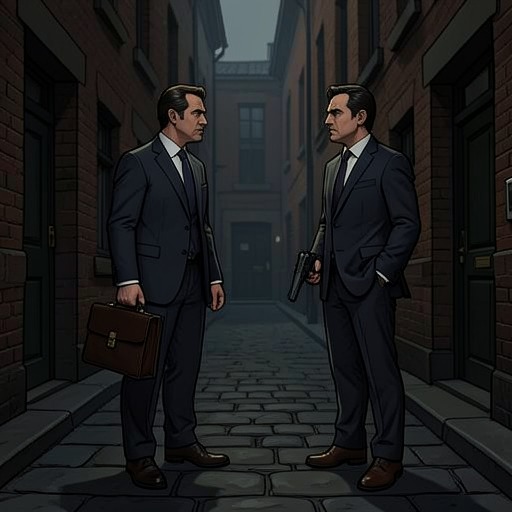
McSweeney disappeared after his identity became a question for the court. Later, when a masked man was being held at the scene of an apparent threat to Haller, the mask was removed and Haller recognized him as the missing juror from the trial. Haller identified him as juror number seven; Bosch then confirmed that McSweeney had been absent that day and that the Sheriff’s Department was looking for him. Bosch told Haller that they had saved his life and that McSweeney had been about to push him over the side. The episode connects the concealed jury operation to direct danger for Haller, while Bosch’s intervention brings the missing juror into custody.
McSweeney immediately tried to turn his capture into leverage. He called across the clearing to Haller, offering to make a deal and claiming that he could provide information about powerful people. Haller advised Bosch to act while McSweeney was ready to bargain, before he remembered his right to counsel. The offer suggests that McSweeney understood the scheme extended beyond his own false identity, but the evidence here does not establish what information he ultimately supplied or the terms of any deal.
Indictment and Narrative Significance
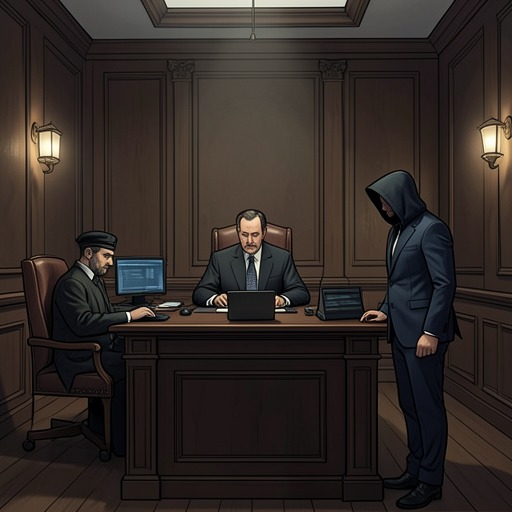
Bosch later told Haller that a grand jury had returned indictments against Judge Holder, Mitch Lester, Bruce Carlin, McSweeney, and a woman who supervised the jury office and had provided access to its computers. The group was to be taken into custody simultaneously. Bosch described the evidence as including phone records, money transfers, and a recording McSweeney had made of the supervisor’s husband during conversations. These details place the impersonation within an alleged institutional conspiracy rather than presenting it as an isolated act by a rogue juror. The indictments mark a major investigative consequence, but they are charges, not proof of a conviction.
McSweeney’s plot function is to give the jury-tampering theory a human identity and a traceable chain of evidence. The false residence on the J-sheet, the Beverly address linked to his vehicle, and the license photograph turn an abstract suspicion into an identification; the court’s record then exposes the difference between the person officially assigned to seat seven and the man who occupied it. His later capture and offer to cooperate widen the inquiry toward the people who enabled access to the jury system. Through McSweeney, the apparent neutrality of random selection is shown to be vulnerable not because the process is mysterious, but because people could interfere with its records and checkpoints.